

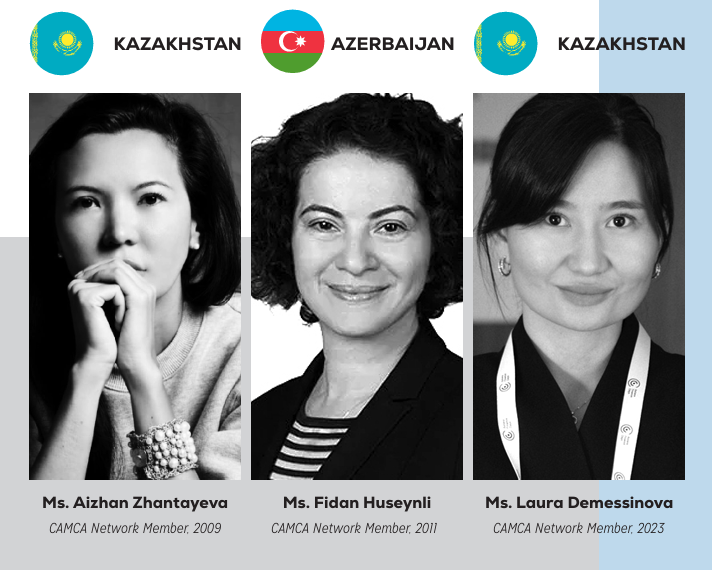
We’re proud to share an interview with the founders and editorial team of CAMCA Talking – a digital magazine featuring diverse stories from regional changemakers championing collaboration, innovation and leadership. Hear in this new blog post on the what, the how and the why of CAMCA Talking from its talented creators: CAMCA Fellowship alums – Aizhan Zhantayeva (Kazakhstan), Fidan Husseynli (Azerbaijan) and Laura Demessinova (Kazakhstan). We hope you will join us in following this unique publication and all of the inspiring stories of regional change among its pages.
.
What inspired you to start CAMCA Talking and why did you decide to devote your time and efforts to make it happen?
 The CAMCA Fellowship Program has existed for nearly 18 years, and over this period it has brought together an extraordinary community of leaders, thinkers, and changemakers from across the region. Through the Fellowship’s Network, we have met remarkable people whose work, ideas, and impact deserve far greater visibility. Also, while we enjoy reconnecting annually during our CAMCA Regional Forums, a few days together each year is simply not enough to fully understand, appreciate, and engage with the richness of our community.
We therefore realized that there was a need for a dedicated platform – a space where these stories could live beyond annual meetings, where the projects of our leaders could be shared, amplified, and connected. CAMCA Talking was created to showcase these initiatives, to help leaders both across and outside of the region find each other, collaborate, and build meaningful partnerships. (Aizhan)
How did your experience as CAMCA Fellows shape your vision for the magazine?
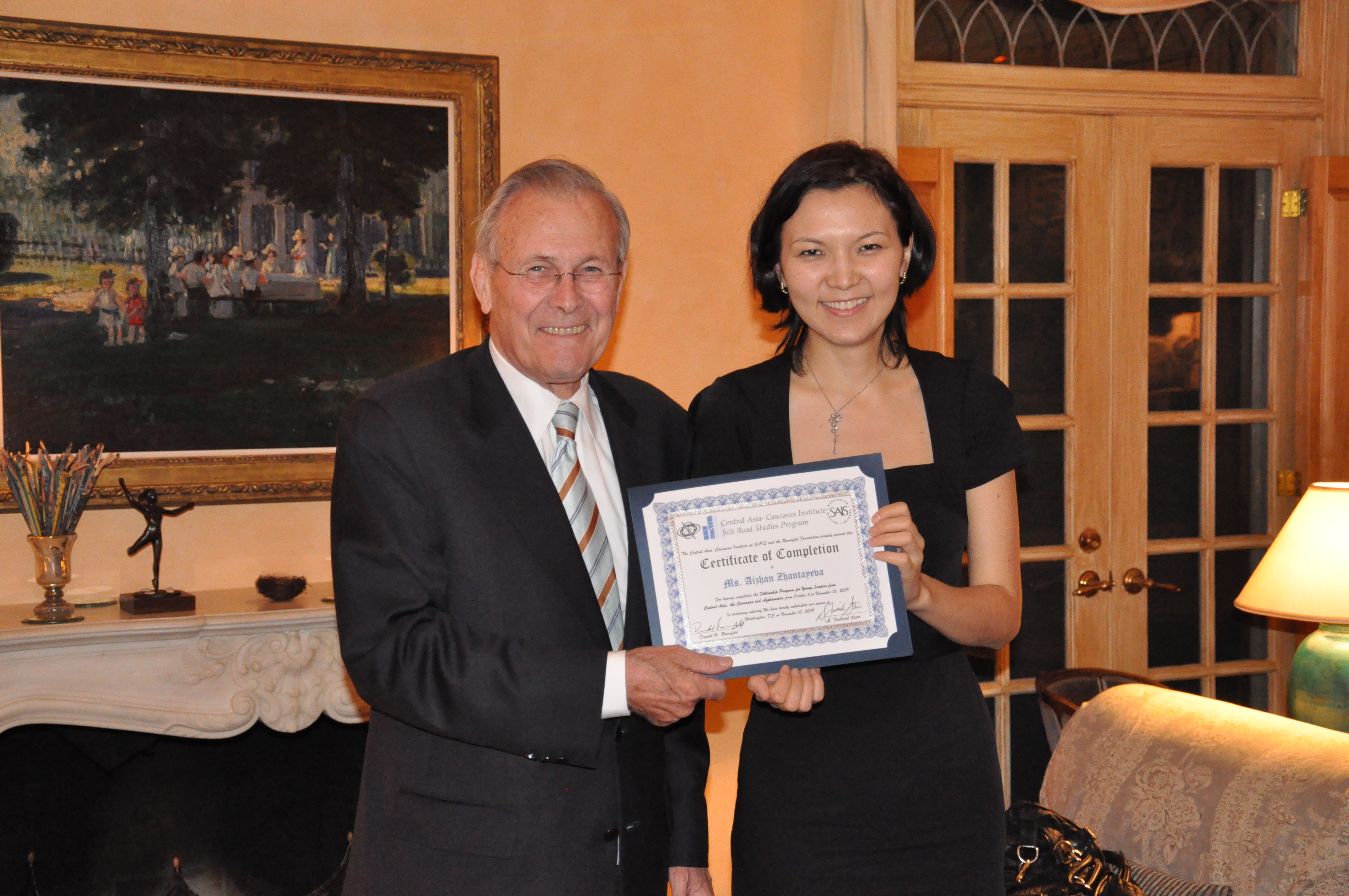
I joined the CAMCA Fellowship Program as part of one of its earliest cohorts in October 2009. Since then, I have remained closely connected with many members of my group. At that time, although we shared strong values and a sense of belonging, it did not seem that we had clear opportunities for joint projects. However, over the years, those connections gradually evolved. We began to collaborate, discovered unexpected, shared interests, and realized that many of us had developed remarkably similar perspectives on leadership, society, and regional development.
We originally came from very different professional backgrounds – business, education, public service, media, and technology. Yet, over time, our paths converged into a unique intellectual ecosystem that now forms the foundation of CAMCA Talking. We recognized that members of the CAMCA community are far too multidimensional to be represented by a single narrative. Each of us lives through multiple personal and professional transformations. That is why the magazine is built around diverse stories connected by one central theme: change. It reflects how transformation unfolds across different lives, industries, and contexts, shaping both individuals and the region as a whole. (Aizhan)
Can you describe the magazine’s mission?
Sharing the voice of a changing region – this is exactly how we envision the magazine: a space where the region speaks in its own voice, confidently, thoughtfully, and on its own terms.
CAMCA Talking has a simple yet powerful mission: to give innovators, decision-makers, businesses, and young leaders across the region a platform to share their stories firsthand and connect with the wider world. At this time of intense transformation, we believe others should not merely describe the region, but it should define itself through its own experiences, expertise, and aspirations.
We seek stories that resonate across the entire CAMCA space, stories that go beyond individual success and explore how ideas, models, and achievements can inspire and be applied within a broader regional context. By highlighting these shared experiences, CAMCA Talking contributes to a stronger sense of regional identity, mutual understanding, and long-term cooperation. (Fidan)
Why is it so important for the CAMCA region to have its own platform telling its stories “from within” rather than through external narratives?
 Although the CAMCA region is connected by shared history and cultural heritage, it often remains fragmented in how it is perceived and represented. Too frequently, the region is analyzed and narrated primarily through external lenses, which can overlook nuance, internal dynamics, and the diversity of voices within it.
For many years, during CAMCA alumni gatherings and Forums, we reflected on the importance of building a credible expert community capable of articulating regional developments directly to international audiences. A region undergoing significant political, economic, and societal transformation should contribute actively to the discourse shaping its future.
Having our own platform matters because it creates a trusted source of information rooted in lived experience, regional expertise, and local accountability. It allows us to shape the discourse, define our priorities, and present our realities with authenticity. In doing so, we move from being subjects of analysis to becoming contributors to global conversations. (Fidan)
What voices and types of stories are you seeking to amplify?
For us, it is very important to amplify voices that are often underrepresented in the media yet are actively driving innovation and meaningful change in their fields. We are particularly interested in leaders, practitioners, and changemakers who may not always be visible in mainstream platforms, but whose work is transforming education, social entrepreneurship, industry, governance, and community development across the region.
In terms of balance, we consciously curate a mix of analytical pieces, personal narratives, and in-depth feature reporting to reflect the diversity of change happening within the CAMCA region. (Aizhan)
Who is your primary audience — regional readers, global policymakers, academic circles, or all of the above? And what have you found resonates most with your audience?
 Our primary audience includes readers across the CAMCA countries, as well as policymakers, business leaders, innovators, young professionals, and members of the international community who seek informed perspectives on the forces reshaping our region. In essence, we speak both to the region itself and to the wider global audience that wants to better understand it.
It is still early to draw firm conclusions after only two initial issues, but the early response has been very encouraging; our readership doubled with the second issue. What appears to resonate most are tangible success stories, emerging industry sectors, and authentic experiences that demonstrate real-life impact. Readers respond particularly well to content that connects individual achievements to broader regional dynamics – stories that illustrate how innovation, leadership, and entrepreneurship are actively shaping the future of the CAMCA countries. There is a clear interest in analysis that is grounded in lived experience and linked to practical outcomes, rather than abstract commentary. (Fidan)
What impact have you seen, or do you hope to see, the magazine have on perceptions of the CAMCA region externally? And what impact on regional readers?
Externally, the magazine serves as a credible voice of the CAMCA region, shaping how the region is understood in global conversations on economics, governance, and sustainable development. It moves beyond outdated narratives by highlighting expertise, innovation, and emerging leadership. Within the region, it strengthens a shared professional identity and reinforces confidence in our collective potential. Our goal is to articulate a forward-looking regional narrative grounded in competence and solutions. (Laura)
Can you tell us about the kinds of topics you are interested in featuring and why?
The magazine’s thematic scope is intentionally diverse – a form of intellectual eclecticism that reflects the reality of the region, where transformations are unfolding simultaneously across the economy, institutional architecture, entrepreneurship, education, women’s leadership, sustainability, and the digital landscape.
We deliberately avoid limiting ourselves to a single sector or a narrow agenda, because change never happens in isolation. It affects entire systems – from public institutions to private initiatives, from social dynamics to technological shifts. CAMCA Talking aims to capture and make visible this interconnected nature of transformation.
At the same time, our primary focus is on applied knowledge, leadership and management experience, and reforms in action. We are interested in practical insights, implemented models, and scalable solutions that demonstrate the intellectual and professional capacity of the CAMCA region and its ability to shape its own development agenda. (Laura)
How can interested individuals and organizations engage with and support your work? And how can regional leaders contribute their ideas to future issues?
Professionals can contribute analytical articles, expert commentary, interviews, and case studies that strengthen the regional discourse. Organizations can engage through knowledge partnerships, thematic collaborations, and by amplifying the region’s expertise globally. We are open to collaborations, strategic partnerships, and joint projects that expand the platform’s reach. As a collective voice of the CAMCA region, the magazine grows through shared leadership and engagement. (Laura)
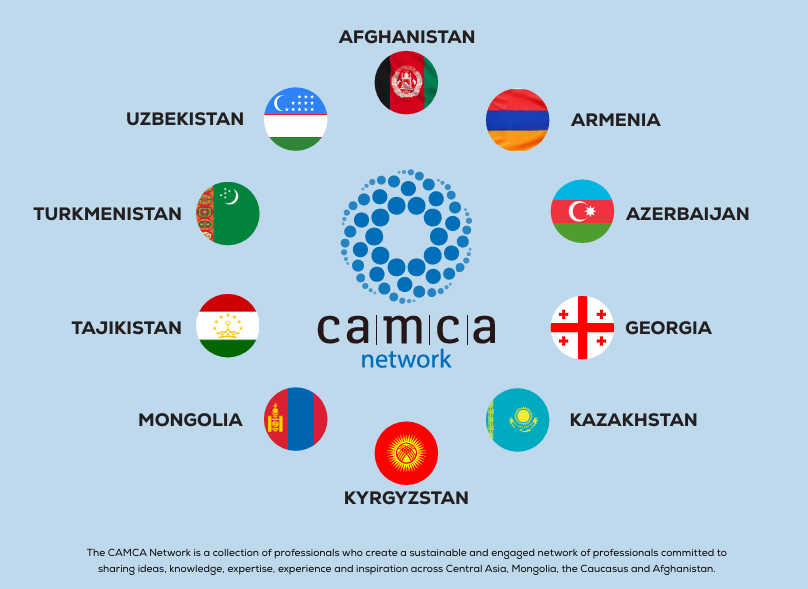
The Foundation is delighted to be supportive of various initiatives of the CAMCA Network, our CAMCA Fellowship’s formal alumni network. Learn more about the CAMCA Network’s regional activities and members, and stay up to date on CAMCA Talking’s new issues, all at the CAMCA Network’s website. Contact the editorial team directly via LinkedIn.